
Podcast: Play in new window | Download (Duration: 59:09 — 54.2MB)
Subscribe: Apple Podcasts | Spotify | Amazon Music | Podcast Index | RSS
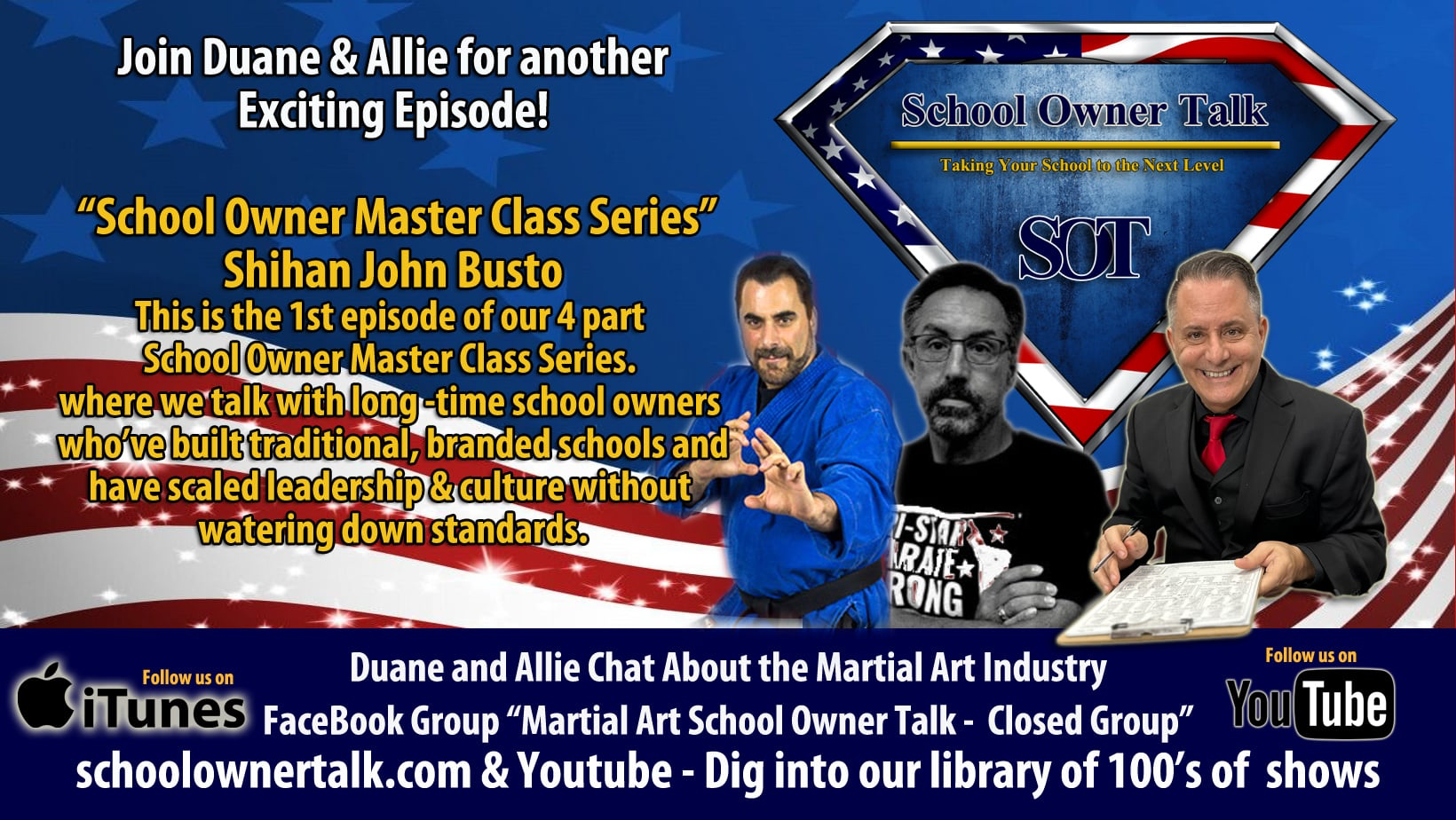
Episode 444 — School Owner Master Class Series (1): John Busto
Podcast Description
In the first episode of the School Owner Master Class Series, Duane and Allie sit down with Shihan John Busto of Long Island Ninjutsu Center—a “quiet master” who’s built a thriving, community-rooted martial arts school for more than three decades.
John breaks down what actually makes a school “branded” in the real world: visible standards, a leadership pipeline, and a culture where students (and parents) feel known. From his helper belt system to instructor check-ins, from “VIP treatment” for every family to building stickiness through events and testing, this conversation is packed with practical ideas you can steal.
Key Takeaways
- A brand is what people feel when they walk in. John wants the public to see a community school with an owner on-site, homegrown instructors, and personalized attention.
- Culture doesn’t happen by accident—it’s engineered. Helper belts, instructor training, and visible recognition create upward mobility that keeps people engaged.
- Make progress visible. Instructor photos on the wall, event photos, requirements posted, and clear signage all reinforce “this is a professional place with standards.”
- Human connection is the retention strategy. Greeting families, recognizing students every class, and giving quick progress updates keeps parents bought in.
- Your schedule and pricing are strategic tools. Too many options can create confusion; simplify access, then offer clear upgrades.
- Plan for the end game early. Retirement isn’t just an age—it’s a plan. Start building the habit of putting money away even when you’re new.
Action Steps for School Owners
- Define your “3-floor elevator pitch.” Write one sentence that includes: who you serve, how long you’ve served them, and what makes your program different.
- Build a helper pipeline (even for kids). Create a “junior helper” role so younger students can assist, feel important, and start seeing a path forward.
- Add visible recognition inside your school. Put instructor photos + names on the wall. Add event photos. Post requirements. Make the culture impossible to miss.
- Run weekly instructor training. Even a simple weekly class that covers protocol, teaching basics, and “what to do when…” will raise standards fast.
- Do instructor check-ins on purpose. Don’t let staff walk in and jump straight into class. Ask how they’re doing, what’s going on, and what they need.
- Treat every family like a VIP. Greet them, acknowledge them, and give quick progress feedback after class. Make it normal.
- Invite non-testing families to belt tests. Sell the vision: “Come see what the future looks like for your child.” Use booklets, letters, and photos to make it emotional.
- Use “stick strategies.” Create reasons families don’t want to leave: community events, handwritten cards, recognition rituals, and shared experiences.
- Simplify your schedule and upgrade structure. If your upgrade program is too hard to attend, reduce the required frequency and keep the value clear.
- Start your ‘God forbid’ plan. Ask: what happens if you can’t teach tomorrow? Begin building systems, leaders, and savings now.
Additional Resources Mentioned
- Spark Membership / Spark University (software and curriculum tools)
- The concept of “stick strategies” (creating community + touchpoints that increase retention)
- Community events (Relay for Life, school visits, women’s self-defense)
- Instructor recognition systems (photos, bios on website)
